
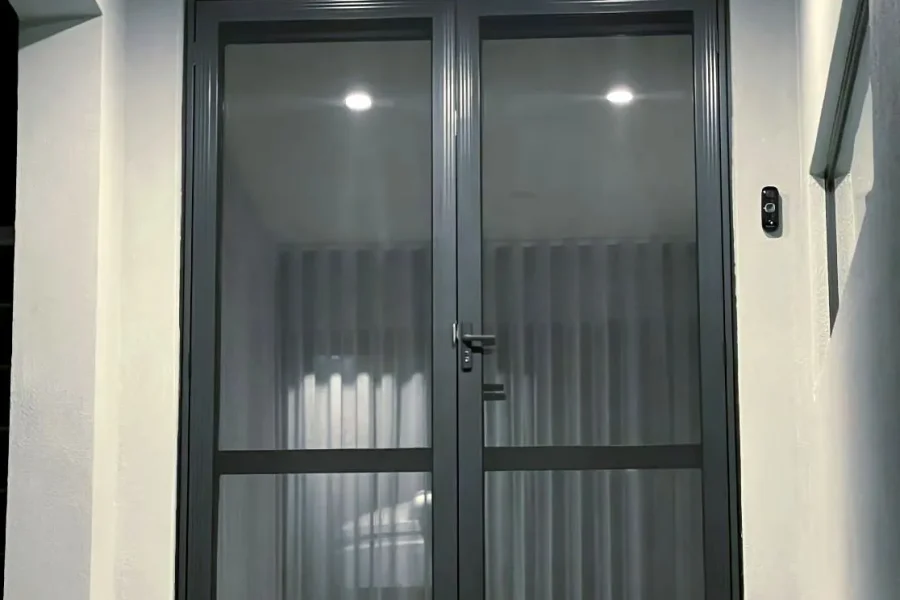
The ACT bushfire season officially starts on 1 October and usually runs to the end of March. For homes on Canberra’s urban edge, that is six months when embers are the main risk to the house.
Window and door screens are one of the simplest upgrades you can make. This guide explains how embers get into homes, what Bushfire Attack Level (BAL) ratings mean for your windows, and how to choose a screen that matches your property. It’s general information, not a substitute for advice from your building certifier or the ACT Emergency Services Agency.
Why Embers Are the Real Threat
Most homes lost in bushfires are not hit by a wall of flame. They are set alight by embers carried on the wind, sometimes well ahead of the fire front, which land in gutters, under decks, and through gaps around windows and doors.
An open window on a hot day, a torn flyscreen, or a gap where a screen doesn’t sit flush in its frame can all let embers inside. Once inside, embers can ignite furnishings and flooring.
What a BAL Rating Is
Every block in a bushfire-prone area can be assessed for a Bushfire Attack Level. It’s a measure of how much ember attack, radiant heat and flame contact the building could face, based on the surrounding vegetation, the slope of the land and the distance to the bush.
The levels, from lowest to highest risk, are:
BAL-LOW: very low risk, no specific construction requirements.
BAL-12.5: ember attack.
BAL-19: increasing ember attack and burning debris.
BAL-29: increasing ember attack, debris and radiant heat.
BAL-40: as above, with a growing chance of exposure to flames.
BAL-FZ (flame zone): direct exposure to flames from the fire front.
Your BAL comes from an assessment of your block. It isn’t something a screen supplier chooses for you. If you’re building, renovating or simply unsure, a building certifier can confirm it, and the ACT Government’s bushfire-prone area mapping is a good starting point.
How Window Screens Help
A properly rated screen does two jobs. It keeps embers out of open windows and doors, and it protects the glass behind it from burning debris. Because it’s fixed in place, it lets you ventilate on ordinary hot days with embers and insects kept out. If a fire threatens, close windows and doors as the ACT Emergency Services Agency advises.
What matters is the material, the size of the openings in the mesh, and how tightly the screen fits its frame. A loose-fitting screen with a gap at one corner won’t do the job, no matter how strong the mesh is.
Matching Screens to Your BAL
Elite Window Furnishings supplies and installs the Amplimesh range, which carries tested bushfire ratings:
Amplimesh SupaScreen: woven 316 marine grade stainless steel with 0.8mm high tensile wire. Rated to BAL-40, and to BAL-FZ when paired with a compliant window.
Amplimesh IntrudaGuard: a perforated sheet of 5052 marine grade aluminium, 1.2mm thick. Rated to BAL-29.
Amplimesh PrivacyGuard: an aluminium sheet with tapered directional openings for privacy. Rated to BAL-29.
As a rough guide, homes rated BAL-29 or below can choose any of the three. Homes rated BAL-40 need a screen rated to that level, which in this range means SupaScreen. In the flame zone, SupaScreen also has to be paired with a compliant window.
The traditional diamond grille is not a tested security or bushfire product, so it isn’t a substitute where a rating is required.
Security and Bushfire Protection in One
The same screens are also tested as security screens under AS5039.1:2023 and AS5039.3:2023. That testing includes five 200 joule impacts, a jemmy test of up to 450 newtons at the lock and hinge areas, and repeated knife cuts across the mesh.
For many Canberra households, that means one upgrade covers two concerns: keeping embers out in summer and keeping intruders out all year.
Other Ember Gaps Worth Checking
Screens are one part of a bushfire plan, not the whole thing. Before the season peaks, check:
gutters, roof valleys and the base of walls for built-up leaves
gaps under doors and around window frames
vents and weep holes that open straight into the wall or roof space
doormats, outdoor cushions and firewood stored close to the house
torn or loose flyscreens that could let embers through
The ACT Emergency Services Agency publishes a full checklist for preparing your property and a template for your household bushfire survival plan.
When to Act
Custom screens are measured on site and made to size, so they take time to manufacture and install. Demand also rises as summer gets closer. If your home is on the urban edge, spring is the time to get them ordered.
Getting Advice for Your Home
Elite Window Furnishings measures every window and door on site, and our own team installs every screen we sell. Frames come in a range of powder coat colours to match your existing windows.
You’ll find the Amplimesh range on our security doors page. If you’d like advice for your own home, book a free in-home measure and quote and we’ll talk through your property’s BAL and the screens that suit it.